Disclosure: This website uses affiliate links; I may earn commissions at no extra cost to you. Learn more.
The Quick Verdict
Autonomous Marketing is a system that uses proactive intelligence to make independent marketing decisions based on real-time user behavior.
Automation requires you to build rigid paths and push play. Autonomy analyzes data and account depth to choose the best path on its own. It executes the action to drive results for you.
A standard automated system sends an email every Tuesday at 8 AM.
An autonomous marketing system waits until a specific subscriber is most likely to engage.
It analyzes their past clicks using adaptive memory. It generates a customized offer. It sends that offer exactly when the user is online.
The goal is removing the business owner from the manual decision loop entirely, so the system can focus on driving higher revenue and engagement without human bottlenecks
One of the amazing tool that allows you to do this is ActiveCampaign, specifically their new Active Intelligence 3.0: Wavelength, which will be in the focus throughout our discussion over here today.
What Is Autonomous Marketing?
Autonomous Marketing represents the shift from scheduled software tasks to intelligent systems that correct themselves to maximize engagement.
You no longer have to map out every single conditional scenario. The software interprets incoming data. It decides the next best action. This relies heavily on artificial intelligence and behavioral algorithms.
The system acts as a digital brain. It observes how a lead interacts with a website. It tracks how they read an email. It brings in external signals like industry trends. It adjusts the communication strategy for that specific person without any manual input from you.
Marketing Automation vs Autonomous Marketing
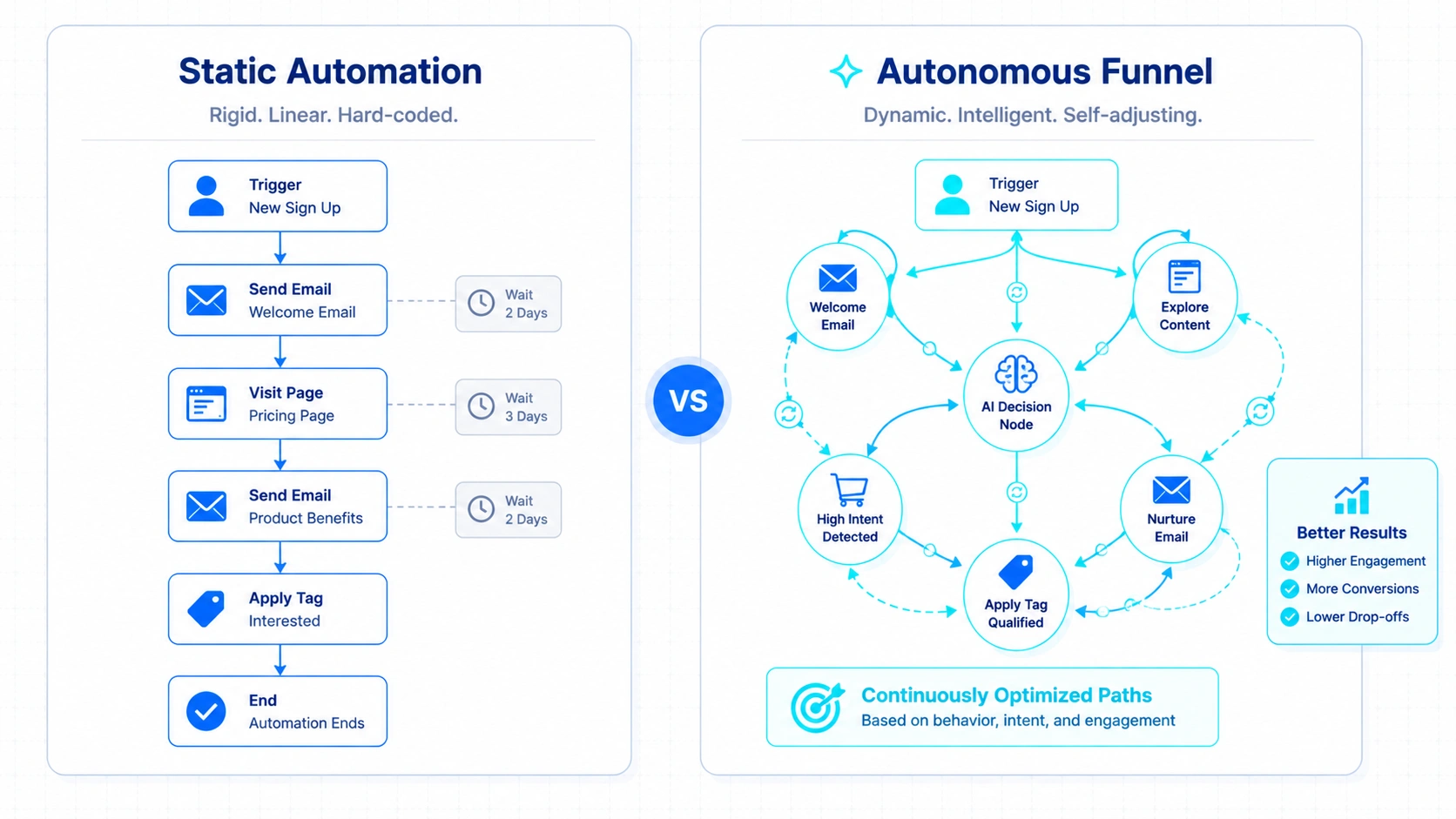
The biggest industry misconception is confusing a timer with a proactive brain.
Standard marketing automation executes predefined instructions. You tell the software exactly what to do. You set the delays. You write the conditions. If the condition fails, the automation stops. It is static. It relies entirely on your manual setup.
Autonomous marketing uses proactive intelligence. You set the ultimate goal. That goal might be booking a consultation or selling a digital product. The system then determines the path to get there to maximize results. It adjusts to the user.
| Feature | Marketing Automation | Autonomous Marketing |
| Core Function | Executes strict rules | Makes independent decisions to drive results |
| Logic Type | Static “If X then Y” | Reactive “Assess data then act” |
| Human Input | High setup and maintenance | Relies on a unified campaign agent |
| Personalization | Based on broad segments | Based on specific account depth and history |
| Adaptability | Fails if data falls outside rules | Learns, adapts, and fixes broken flows |
| Primary Value | Routine execution | Higher engagement and proactive results |
AI Agents for Marketing
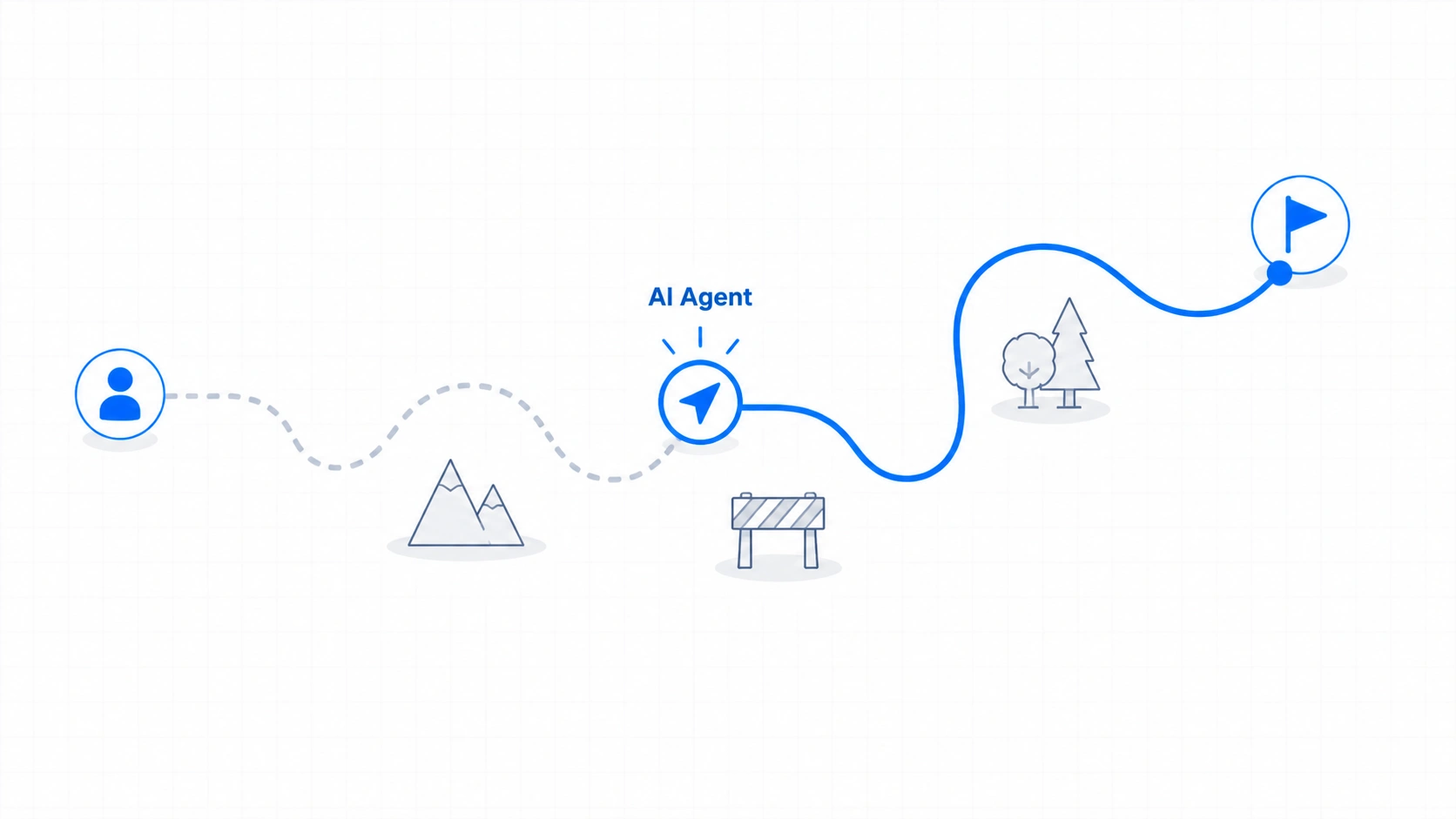
AI agents for marketing are the workers living inside your autonomous system.
They are software entities designed to achieve specific goals. You do not prompt them every single time you need a task done. You give them a parameter.
An AI agent might be tasked with qualifying incoming leads. It monitors website chat. It asks qualifying questions. It analyzes the responses. It routes high value leads to a booking page. It sends low value leads to a free resource.
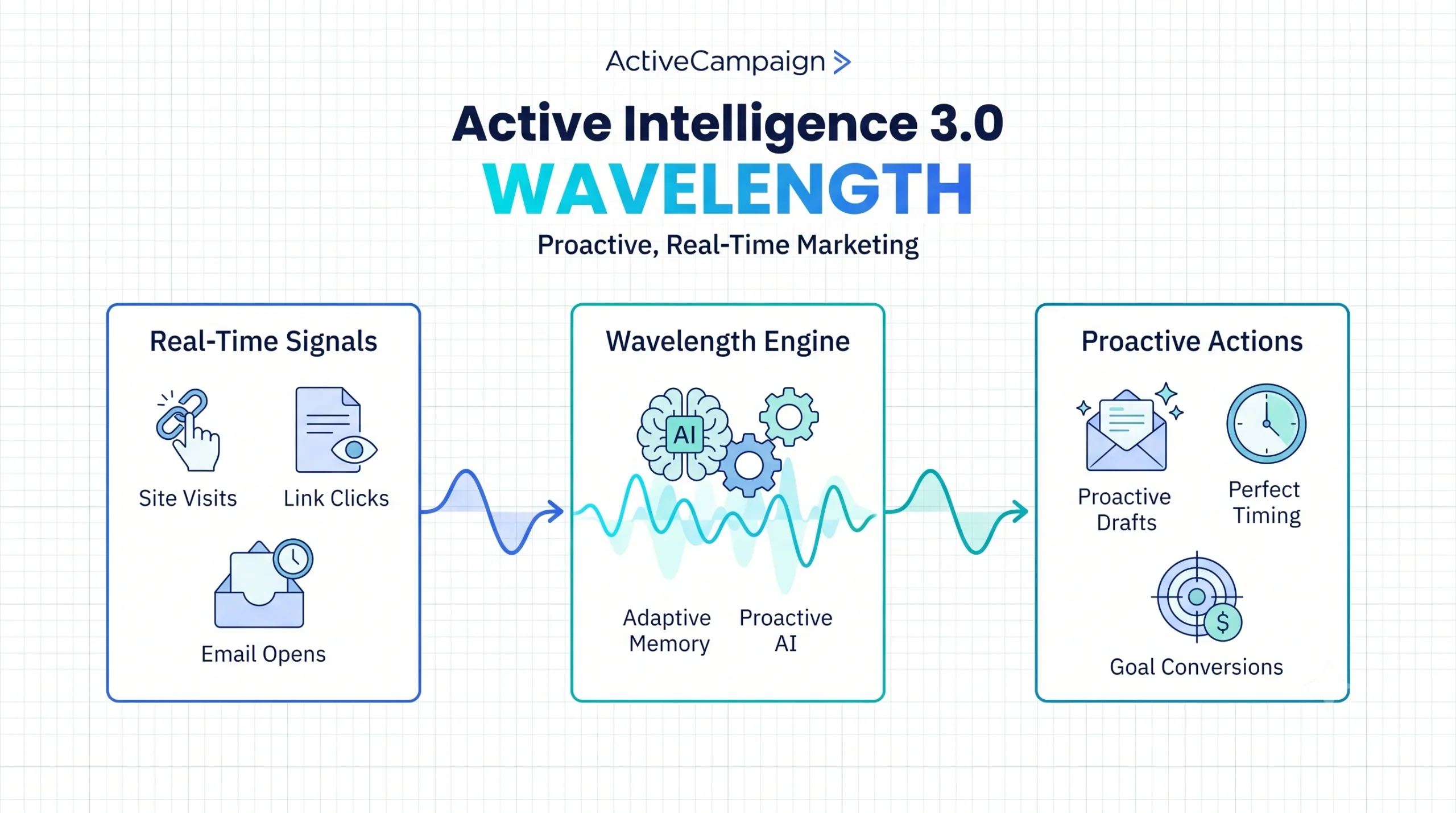
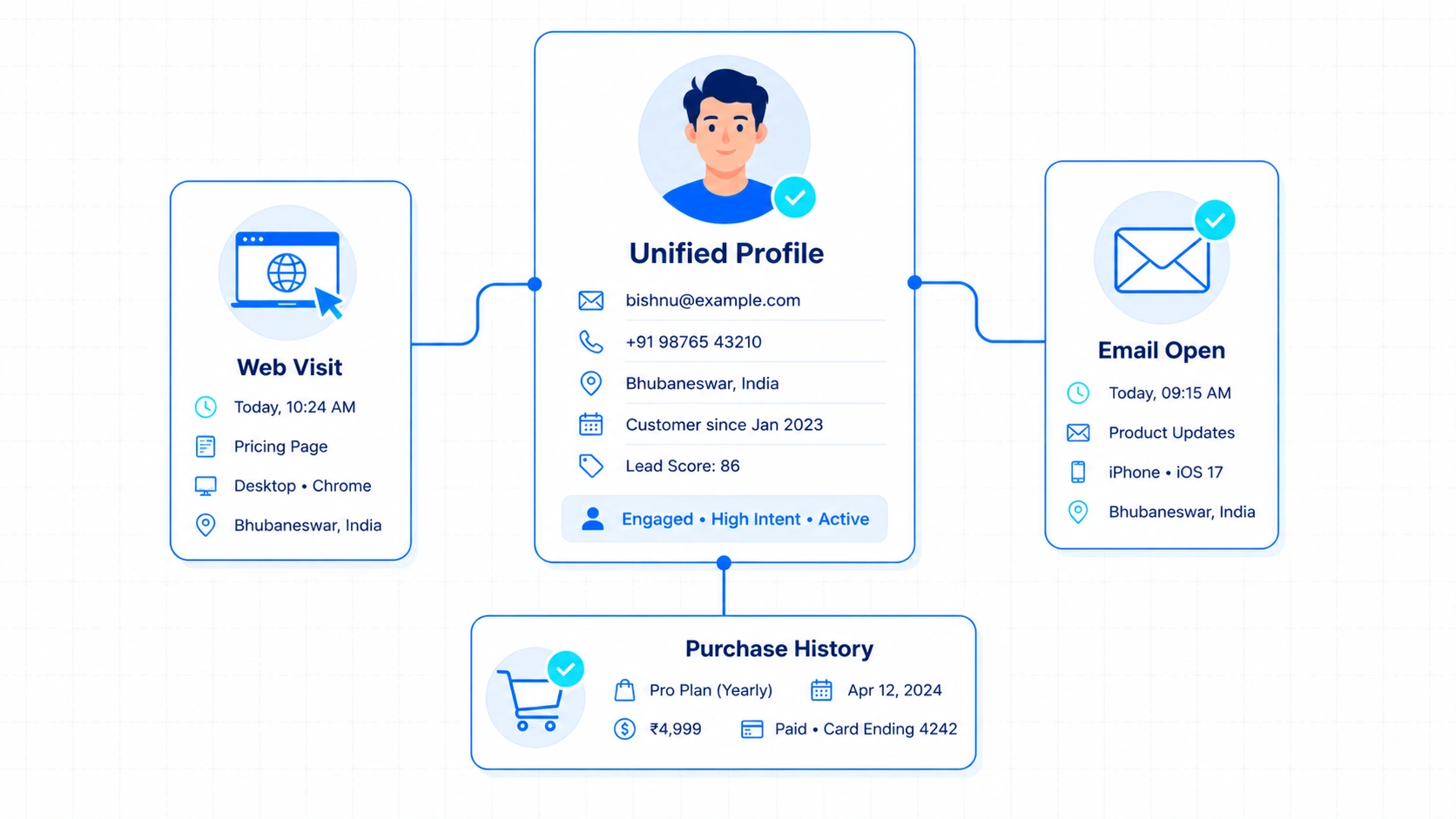
This is where features like Active Intelligence 3.0: Wavelength become the central nervous system for a business. Active Intelligence 3.0: Wavelength processes user data proactively. It acts as a unified campaign agent that connects website traffic to the email server and CRM.
It even uses the new AI Actions Library to draft campaigns based on what actually drives results.
The Core Problem: Why Solopreneurs Get Stuck
Most online business owners hit a growth ceiling they cannot break.
They work twelve hours a day. They barely maintain their baseline revenue. The issue is rarely a lack of effort. The issue is a broken operational model.
Solopreneurs try to manage content creation, audience building, and product delivery simultaneously. They end up becoming the primary bottleneck in their own business because their messaging becomes generic.
Why Most Solopreneurs Confuse Activity With Progress
Doing manual tasks to feel busy is a massive trap.
Many creators spend three hours a day manually replying to identical comments. They manually tag new email subscribers. They build complex spreadsheets to track affiliate clicks.
They feel productive because they are exhausted. But they are confusing activity with progress. Repetitive manual input does not grow a business. it leads to generic messaging that hurts conversion rates. You must separate high-value engagement strategy from low-value execution.
The Hidden Tax of Context Switching
The cognitive cost of jumping between creation and marketing is severe.
Imagine a common scenario for a YouTuber. They are three hours into editing a massive video project. They are in a deep flow state. A notification pops up. A potential sponsor wants a media kit immediately.
The creator stops editing. They open their email. They dig up the PDF file. They write a custom response. They hit send.
They return to the video editor. The flow state is gone. The video takes an extra two hours to finish.
The hidden tax of context switching costs more than any software subscription.
Autonomous marketing prevents these interruptions. A smart system equipped with Automation Health monitoring ensures that your marketing flows aren’t breaking while you are focused on creating content. It alerts you proactively so you never lose engagement.
Efficiency vs Scale
There is a strict difference between doing things faster and having systems drive better results for you.
Efficiency is writing a weekly newsletter faster using a template. You are still doing the work, and the output is basic. The output is directly tied to your physical presence at the keyboard.
Scale is building a self-adjusting email course powered by Active Intelligence 3.0: Wavelength that captures leads, monitors external signals, and pitches a product exactly when the user shows high intent based on their unique account history.
You build the system once. It runs thousands of times, optimizing for engagement every single time.
Why More Automation Does Not Always Mean Better Marketing
Automating a bad strategy just helps you fail faster.
Many small business owners buy expensive tools and immediately try to automate their entire sales process with rigid rules. They build a twenty step email funnel before they even know if their audience wants the product. They push aggressive promotional emails to cold leads because the software makes it easy.
This destroys brand trust. You cannot automate a process you do not understand manually. You must have a proven offer that converts first. Only then do you apply autonomy.
The 4 Frameworks of Marketing Autonomy
Growth happens in distinct stages.
You need to audit your current business operations. You have to understand exactly where you are stuck. I use these four frameworks together as a complete diagnostic map.
They are not random models. They measure your operational fatigue against your technological readiness. Let’s break them down.
1. The Solopreneur Marketing Evolution Framework
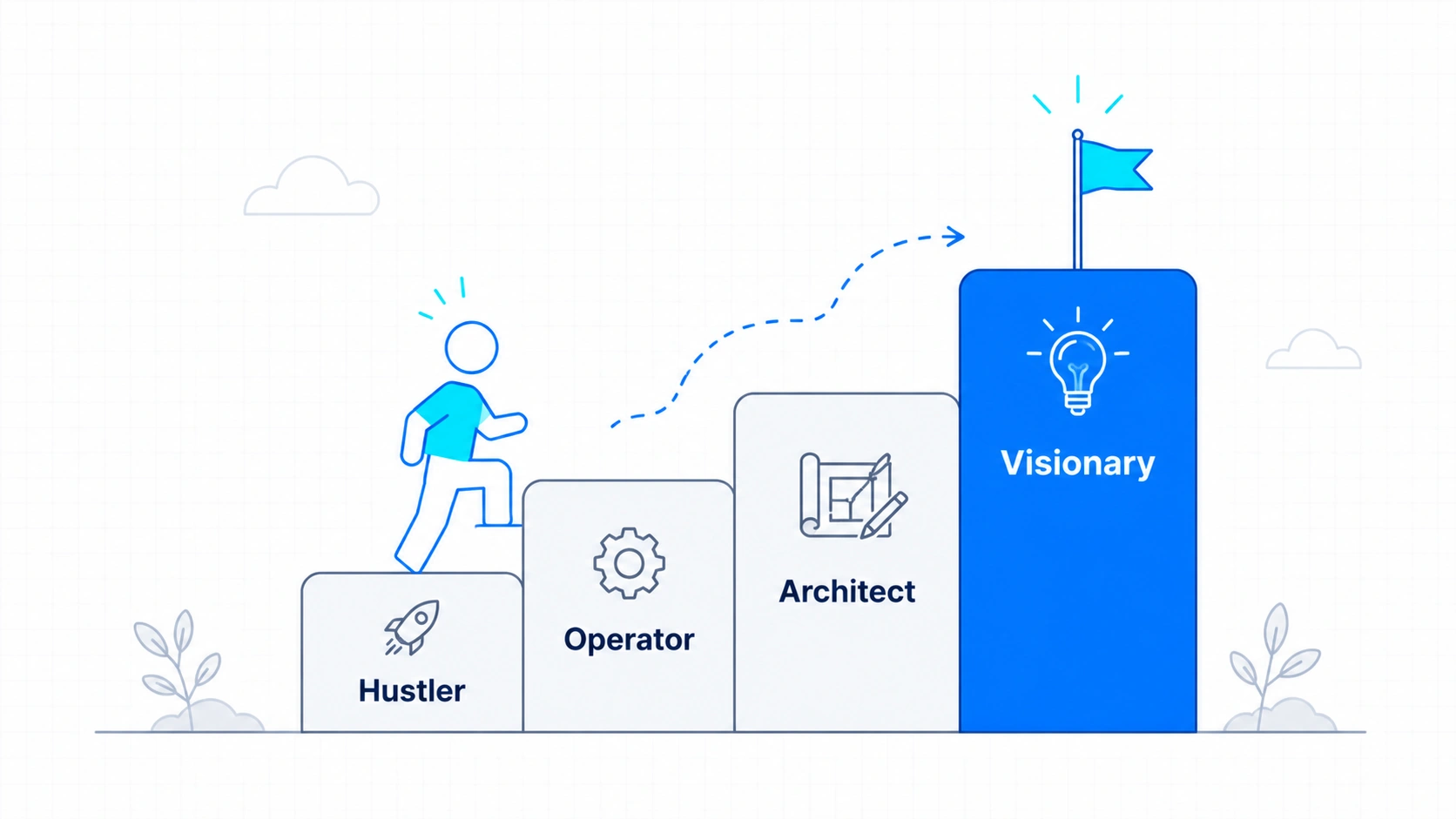
This framework tracks the operational growth of the business owner. It shows the brutal journey from trading time for money to building self-sustaining systems.
Phase 1: The Hustler
You do everything yourself. You write the posts. You send the emails. You format the newsletters.
- The Bottleneck: Management time and generic messaging.
- The Mistake: Believing that working harder increases revenue.
- Readiness to Advance: You turn away opportunities because you have no time to fulfill them.
Phase 2: The Operator
You realize you cannot do it all. You hire virtual assistants or freelancers to handle the repetitive tasks.
- The Bottleneck: Cash flow and management time.
- The Mistake: Paying humans to do tasks that simple software could do for free.
- Readiness to Advance: Your profit margins are shrinking due to labor costs.
Phase 3: The Architect
You connect your tools. You build rigid email sequences.
- The Bottleneck: System fragility. When one tool updates its code, your entire workflow breaks.
- The Mistake: Treating every customer exactly the same.
- Readiness to Advance: Your conversion rates are dropping because your messaging is too generic.
Phase 4: The Visionary
You implement autonomous marketing using Active Intelligence 3.0: Wavelength. The systems use proactive drafts and adaptive memory to route leads without your input, guaranteeing maximum engagement.
- The Bottleneck: Strategy generation. The systems execute perfectly, but they need brilliant initial concepts from you.
- The Mistake: Assuming the system needs zero maintenance forever.
2. The Autonomous Marketing Maturity Ladder
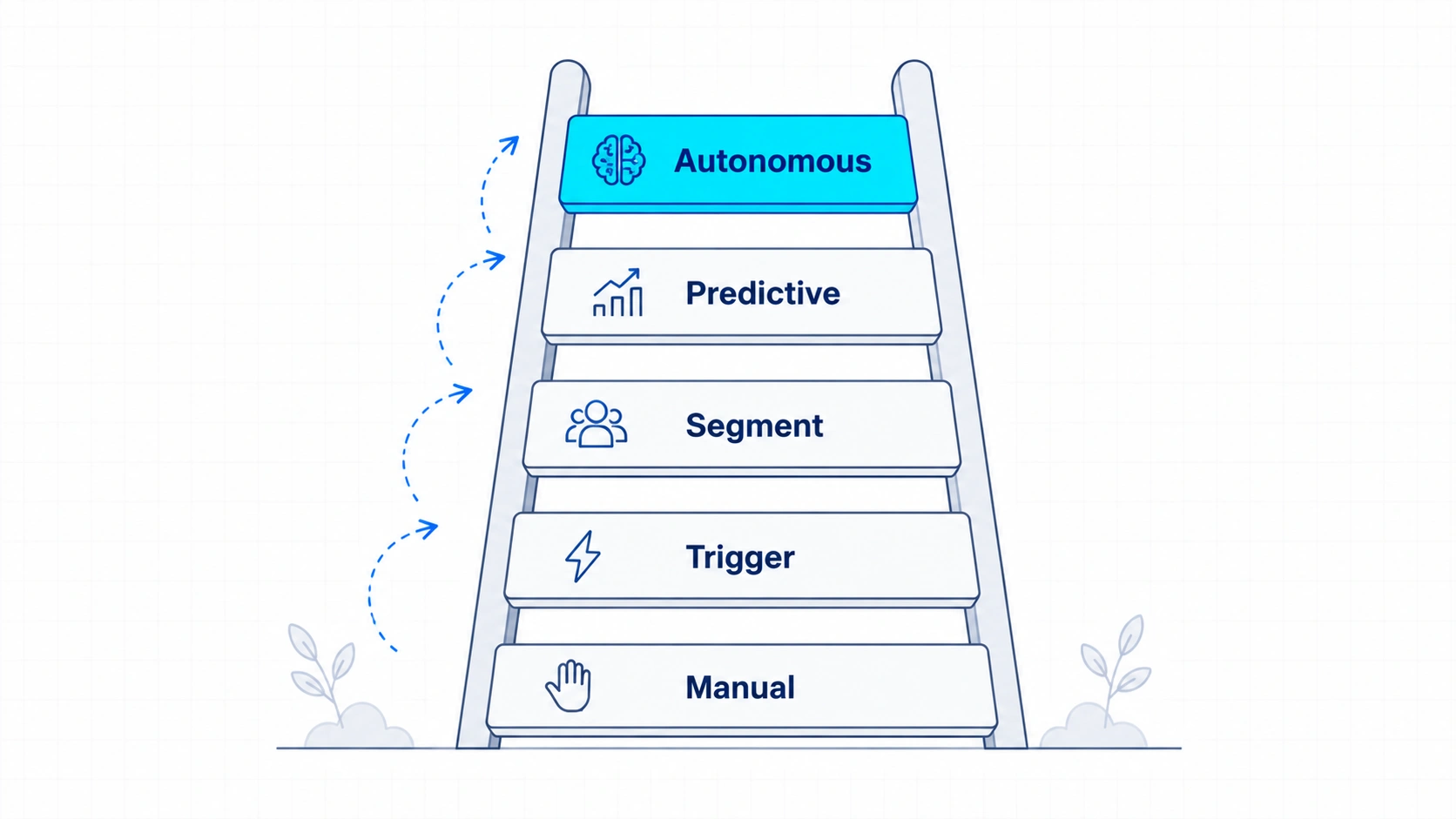
This framework focuses entirely on technology adoption. You cannot skip from the manual phase directly to the fully autonomous phase.
Level 1: Manual Baseline
Every marketing action requires a specific human click.
- Cost: Massive time investment. Zero financial scale.
Level 2: Trigger-Based
You set up basic rules. Someone downloads a guide. The system sends them a welcome email.
- Cost: Low time maintenance. Requires basic software subscriptions.
Level 3: Segment-Based
The system begins sorting people based on static clicks. If a user clicks a link about SEO, they get tagged with that interest. They now receive different emails than someone who clicked a video editing link.
- Cost: Requires moderate setup time and a capable CRM.
Level 4: Proactive Behavioral Phase
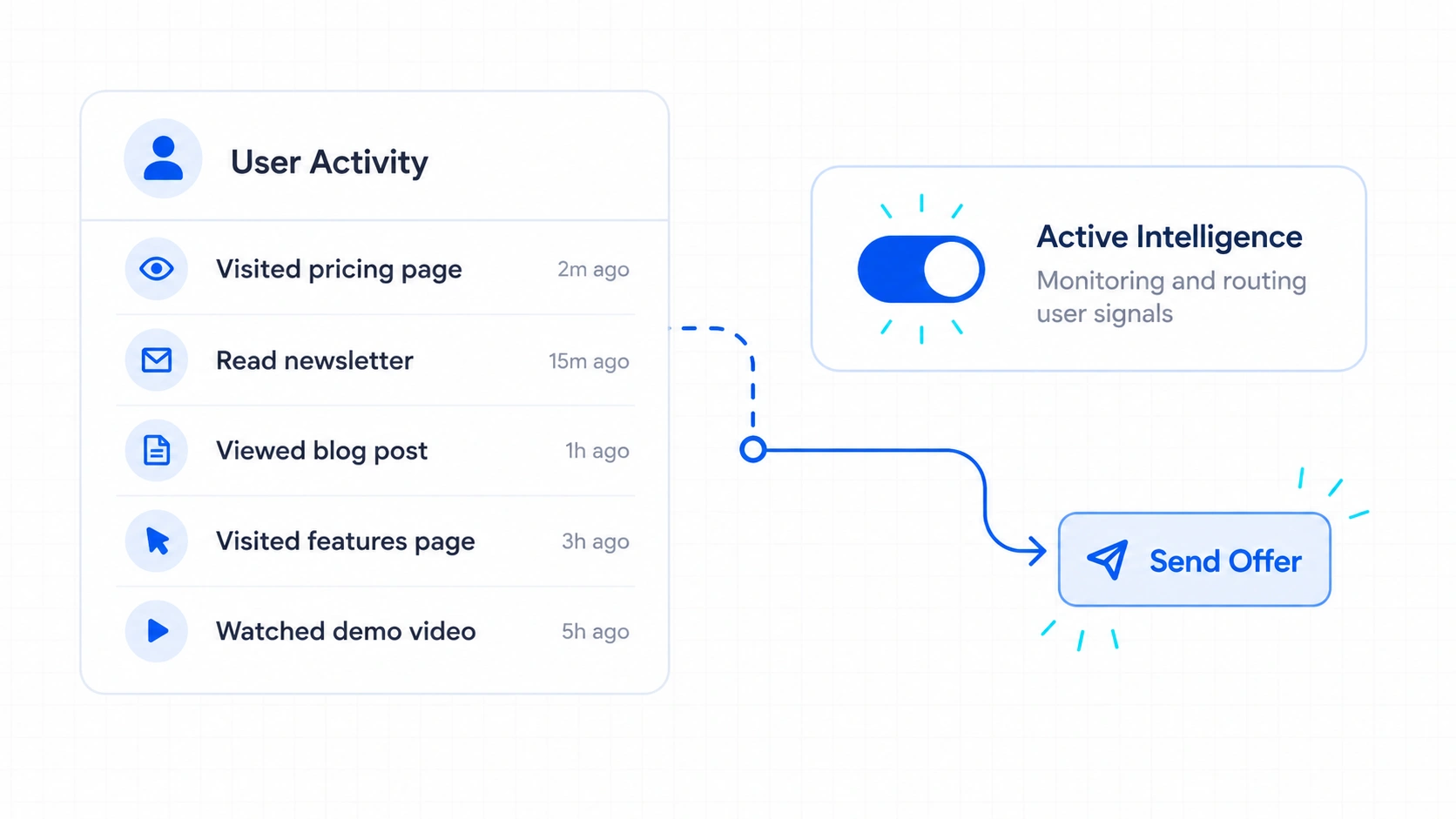
The software analyzes account depth. The system notices a user has visited a pricing page three times in one week. It recognizes high engagement intent and acts proactively to send the right offer.
- Cost: High initial setup time. Requires significant traffic data to function properly.
Level 5: Fully Autonomous
The system acts as a unified campaign agent. Using the AI Actions Library, it tests three different email subject lines. It monitors open rates in real time and drives the highest possible results without being asked.
The Maturity Ladder Breakdown
| Stage | Primary Tool Type | Human Effort Required | System Intelligence |
| Manual | Gmail, Social Apps | 100% | Zero |
| Trigger | Basic Autoresponder | 70% | Low |
| Segment | Tag-Based CRM | 40% | Moderate |
| Predictive | CRM with Active Intelligence 3.0: Wavelength | 20% | High |
| Autonomous | Unified Campaign Agents | 5% | Very High |
3. The Marketing Scale Pyramid
This framework determines how you should allocate your resources. The goal is to move all repetitive tasks to the peak of the pyramid.
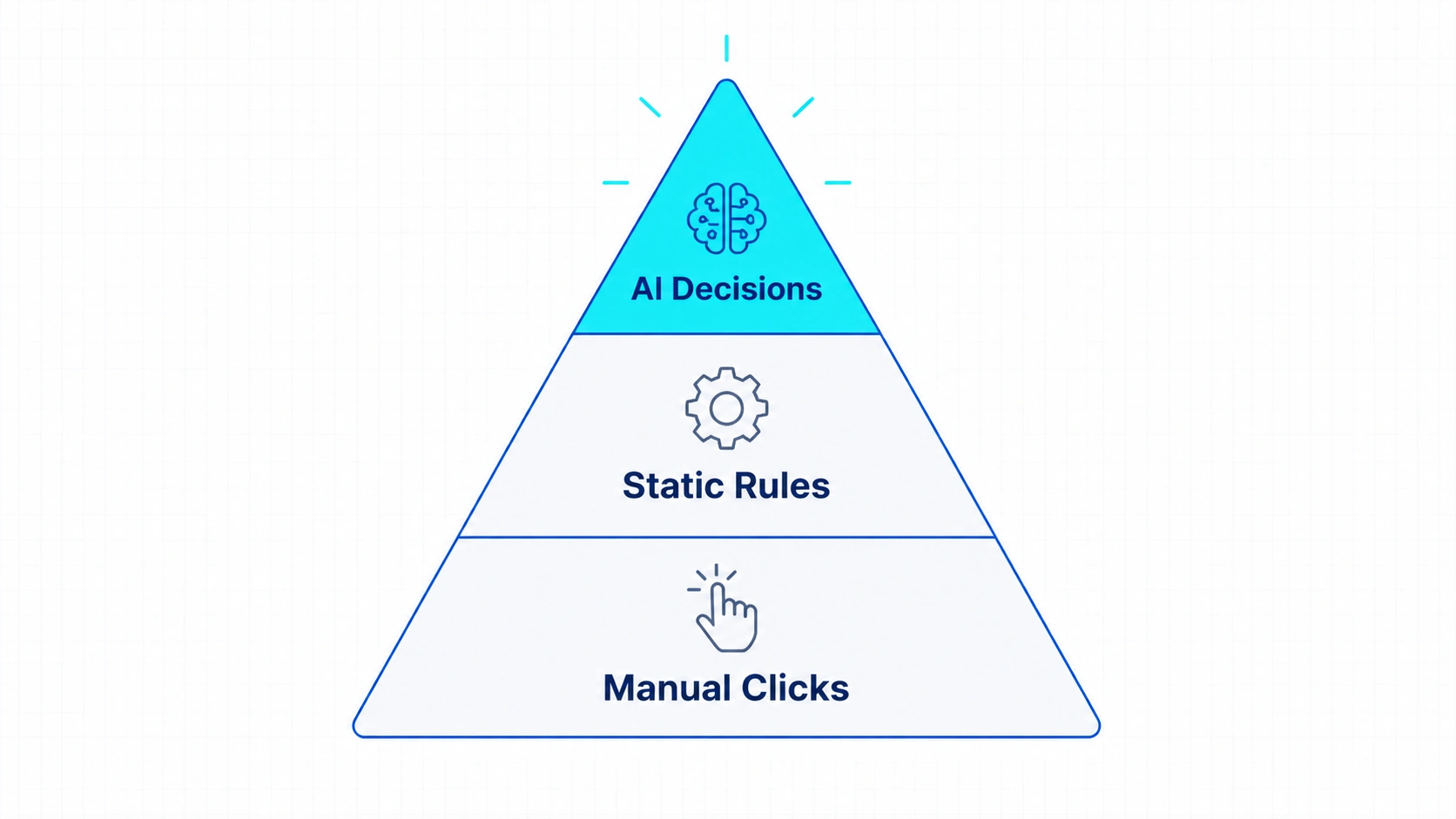
The wider the base of your pyramid, the lower your profit margins.
Many freelancers build a massive base of manual tasks. They try to fix the fatigue by hiring more humans. They build a wider base. This creates bloat.
To gain an advantage, you must push the work upwards. You transition manual data entry into static automation. You transition static automation into autonomous decisions. The peak requires the least amount of daily human maintenance but yields the highest engagement and ROI..
4. The Manual-to-Autonomous Scale (MAS)
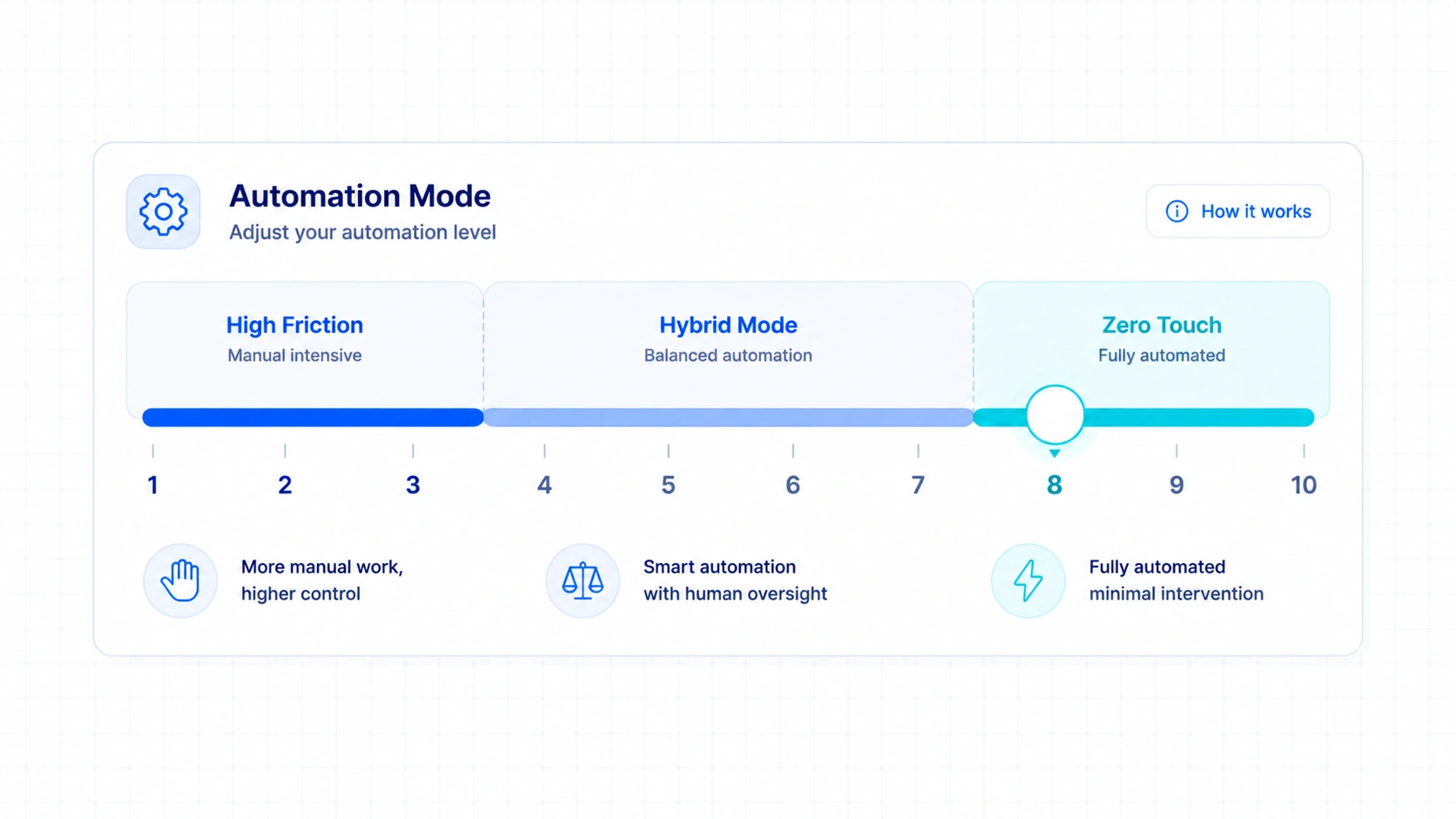
This scale grades specific marketing workflows on a scale of 1 to 10. It measures the exact amount of human clicks required to close a loop.
Scores 1 to 3: High Friction
- Writing a promotional email from scratch every week.
- Checking your Stripe account to see who bought a product. Manually sending them a welcome PDF.
- Replying to every social media message with a typed link.
Scores 4 to 7: Hybrid Mode
- Scheduling a month of social media content in advance.
- Setting up an abandoned cart email sequence.
- Using simple tools to move new leads from a landing page into a spreadsheet.
Scores 8 to 10: Zero Touch
- A dynamic email funnel using Active Intelligence 3.0: Wavelength that proactively changes its messaging based on external signals and individual history.
The Moment You Know You Are Ready for Autonomous Marketing
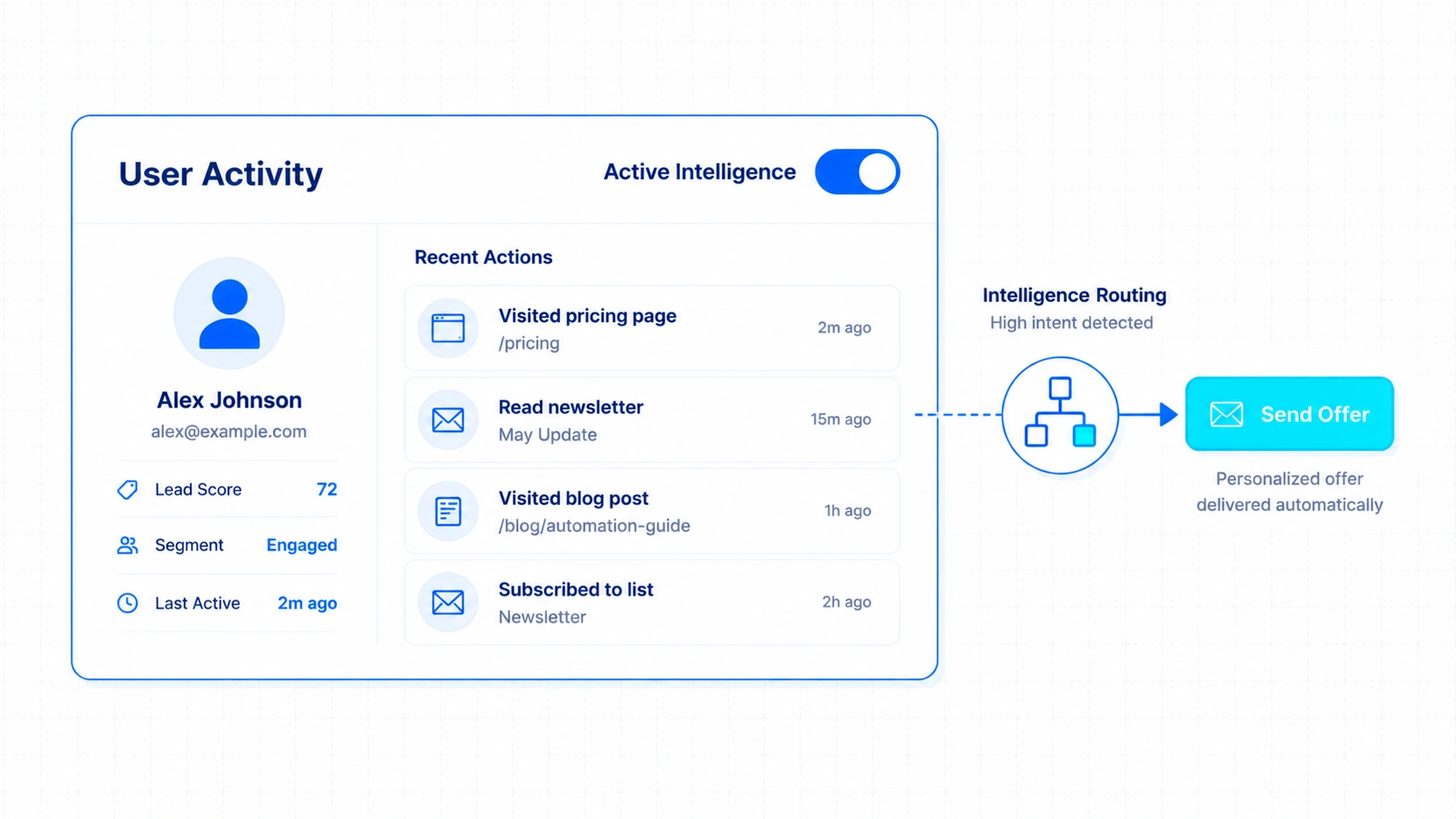
You are ready when generic messaging is costing you sales.
Here is the reality. Most creators buy software too early. They automate zero traffic. But if you hit a specific wall in your business, autonomy is the only way out.
Look for these specific friction points:
- You do the exact same marketing tasks every single Tuesday.
- You manually copy information from a payment processor into an email tool.
- You spend more hours formatting content for distribution than actually writing it.
- You lose hot leads because you forgot to send a follow up email.
- You realize you are the main reason your revenue cannot grow.
- Your conversion rates drop because your emails look like rigid templates, and you lack proactive Automation Insights to warn you when workflows break.
When your physical energy becomes the ceiling for your income, it is time to build the machine.
Implementation: Building Your Autonomous Machine
You need to build slowly. Start with a minimum viable stack. Never automate a broken process.
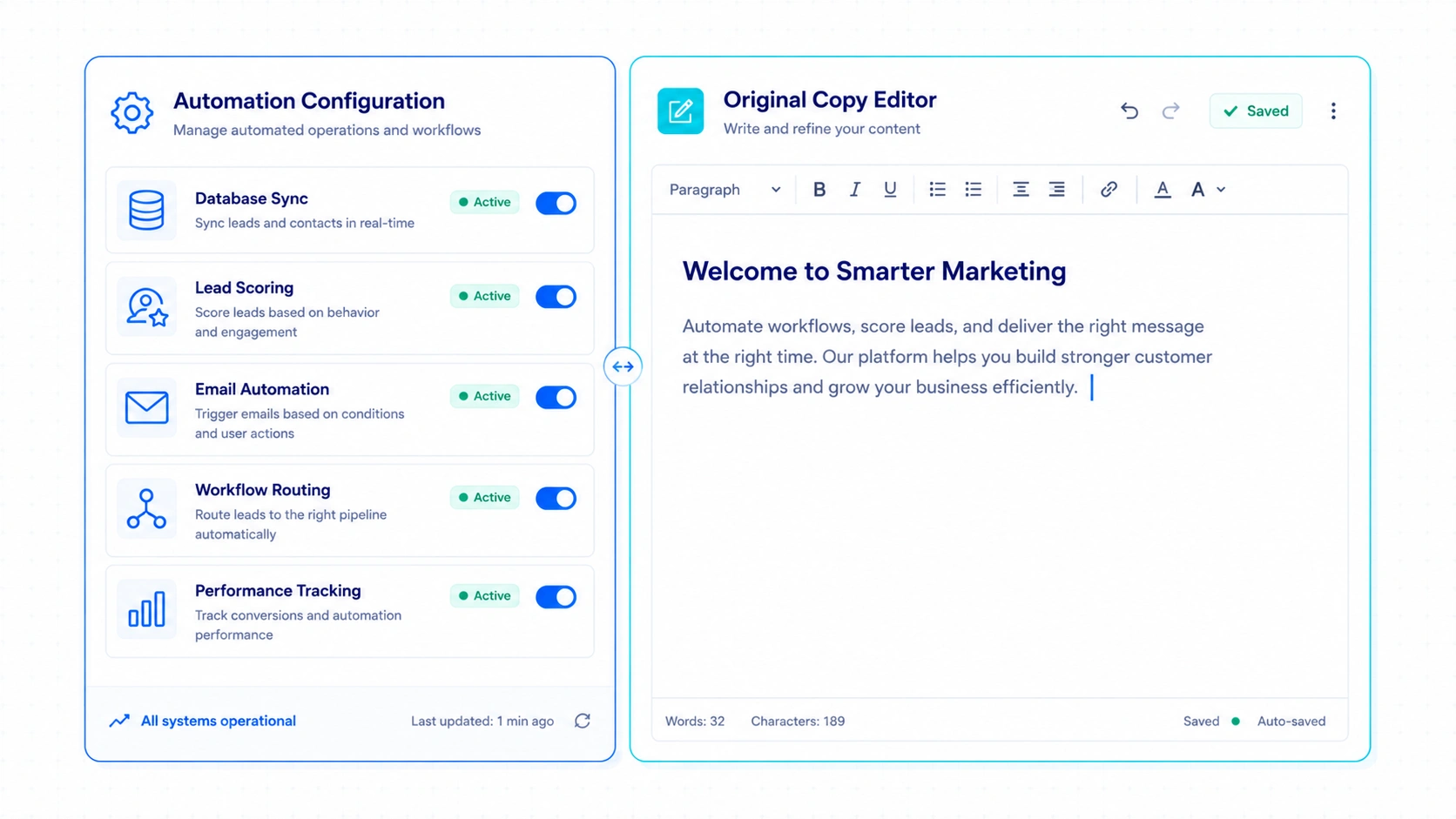
The Minimum Viable Autonomous Marketing Stack
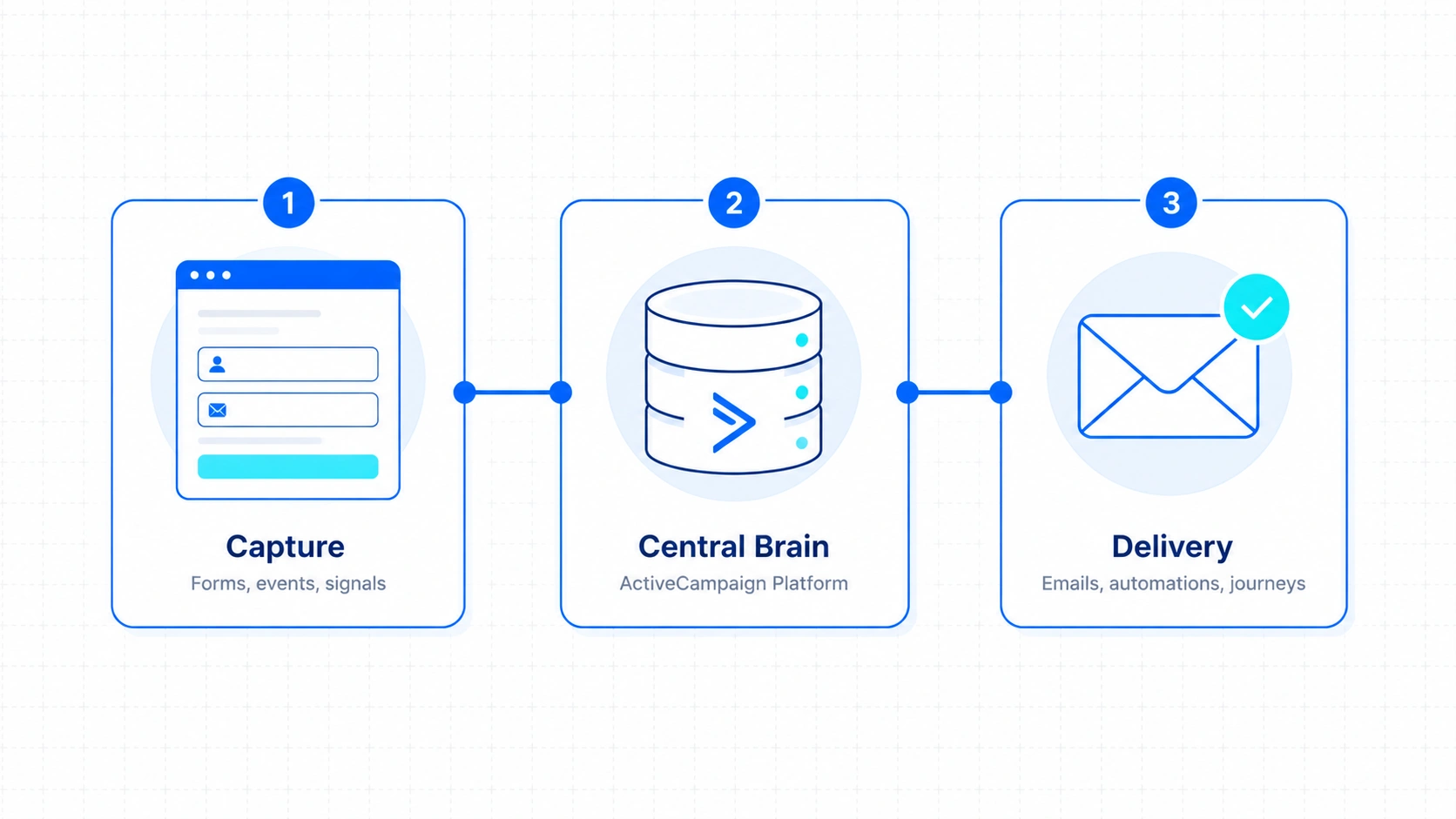
You do not need twenty different software tools. You need three core components that talk to each other.
- The Capture Point: A high converting landing page capable of tracking user behavior.
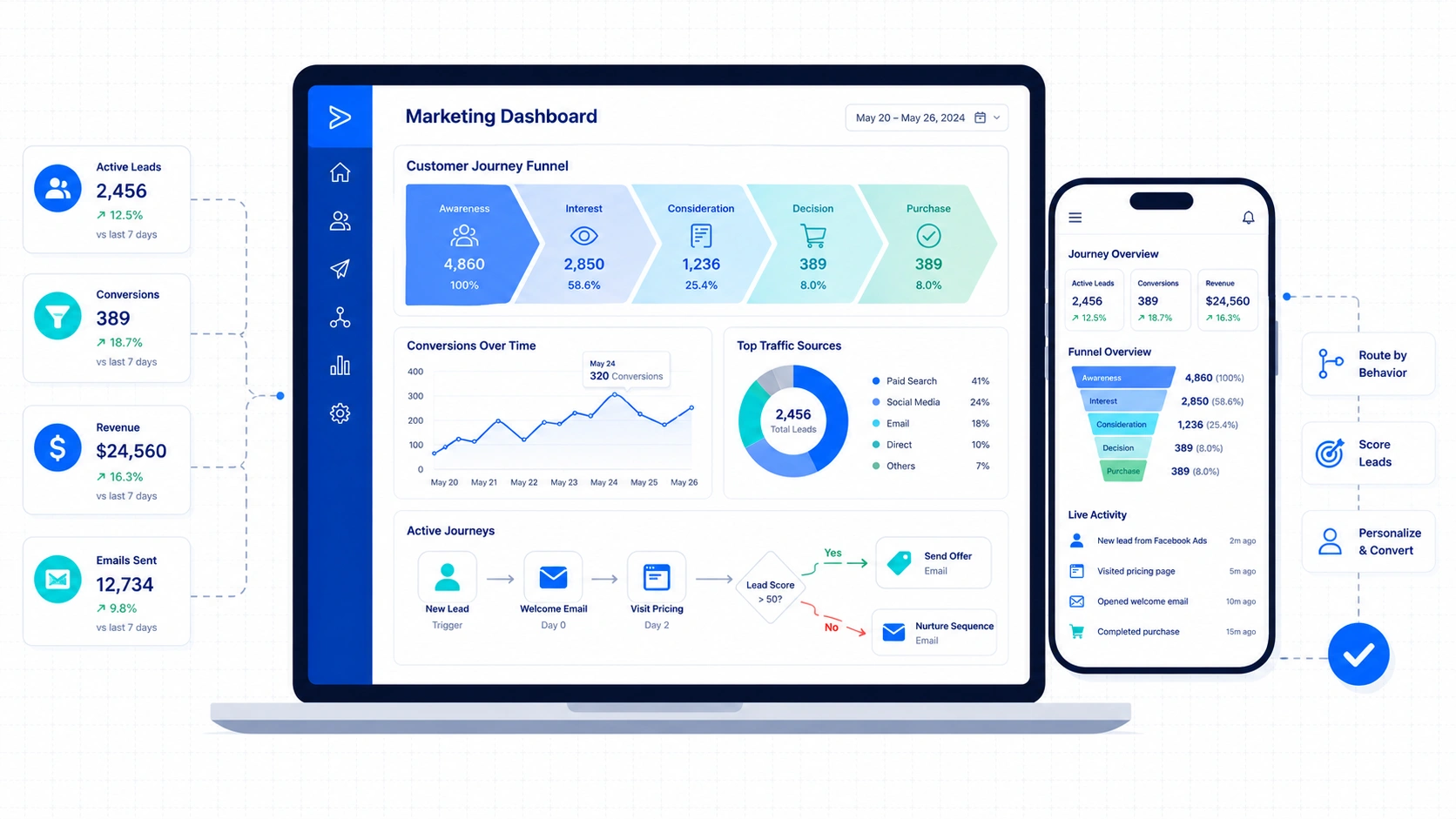
- The Central Brain: A CRM with proactive intelligence, like ActiveCampaign. You need a central nervous system for your data. This is where tools powered by Active Intelligence 3.0: Wavelength evaluate user actions against specific account depth
- The Delivery Mechanism: The tools that actually send the content using adaptive memory to deliver messaging when engagement is highest. This could be your email sender or an AI chat agent on your site.
The central brain is the most important part. If your CRM cannot apply tags dynamically based on link clicks, you can never reach true autonomy. You will be stuck at the Trigger stage forever.
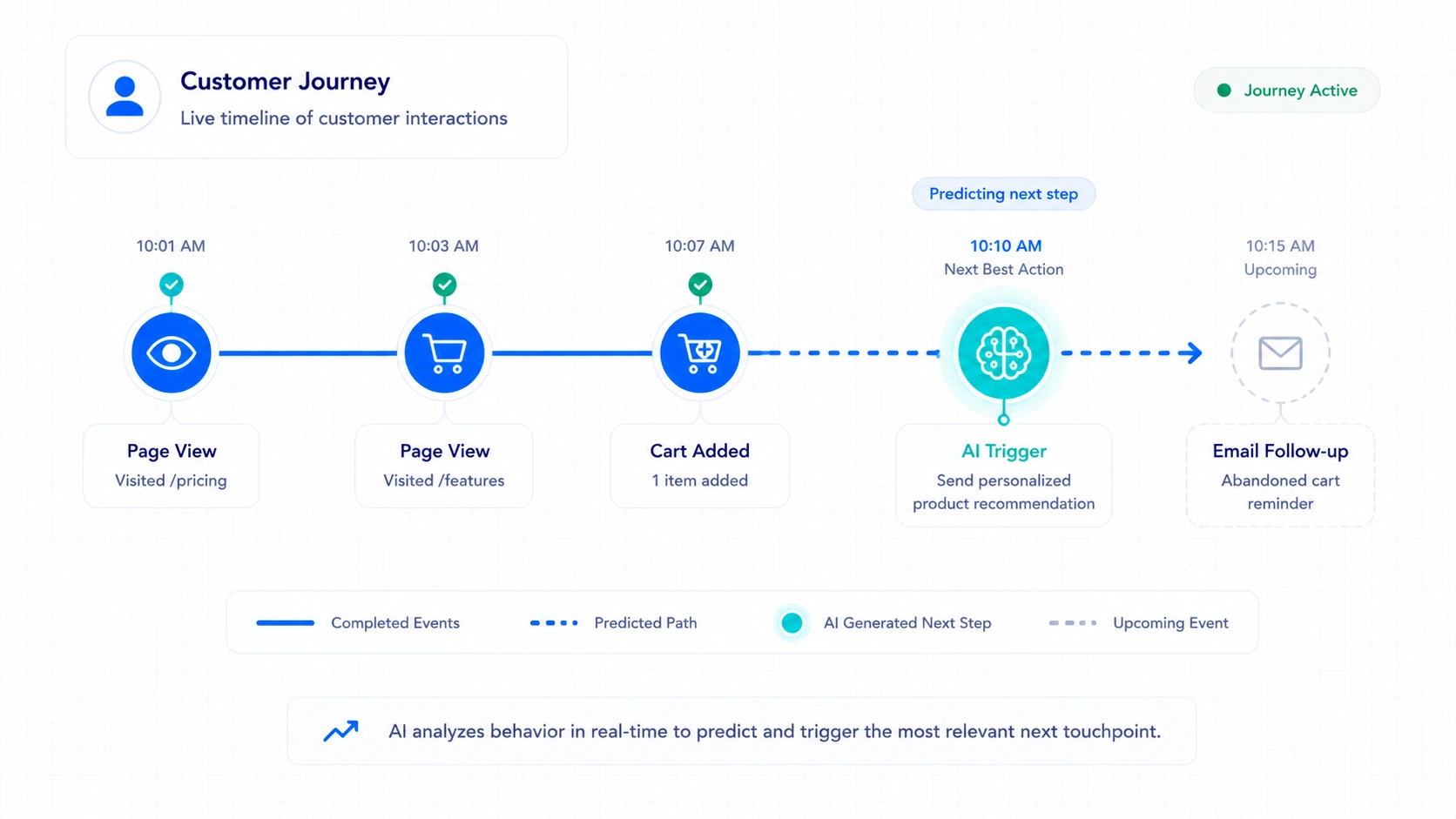
Autonomous Marketing Tools by Business Stage
Buying enterprise software when you have ten website visitors a day is a fast way to go bankrupt.
| Business Stage | Primary Focus | Tool Category | Example Use Case |
| Beginner | Audience Building | Schedulers, Basic Email | Weekly newsletter delivery |
| Intermediate | Monetization | Webhooks, Tag-Based CRM | Delivering lead magnets |
| Advanced | Scaling Revenue | CRM with Active Intelligence 3.0: Wavelength | Behavioral routing based on account depth |
| Expert | Removing the Founder | Custom AI Agents | Proactive behavioral scoring & execution |
What to Automate First
Start with the highest friction points that yield the most immediate return on your engagement and revenue.
1. Lead Capture and Delivery:
Never manually deliver a digital product. When someone signs up for your free guide, the system must deliver it instantly. It must add them to a welcome sequence.
2. Onboarding Sequences:
When a new client signs a contract, an automated workflow should immediately send the invoice. It should send the scheduling link. You should not have to type a single word.
3. Abandoned Cart Recovery & Proactive Follow-ups:
If someone enters their email at checkout but does not buy, a proactive system powered by Active Intelligence 3.0: Wavelength triggers an action automatically to reclaim that engagement based on their account history.
The Human Element: What Should Never Be Fully Automated
Autonomy does not mean removing the human from the brand.
Your audience follows you because of your unique perspective.
If you automate your core creative output, you destroy your specific value.
| Automate This (Machines Excel) | Keep This Human (Machines Fail) |
| Data routing and tagging | Brand voice and core opinions |
| Lead scoring and qualification | High ticket sales conversations |
| Scheduling, triggers, and delivery | Strategic decision making |
| Follow up sequences & proactive drafting | Original content creation |
| Analytics reporting & Automation Health monitoring | Community building and empathy |
Real-World Autonomous Marketing Workflows
Theory is useless without execution. Here are practical templates you can study and implement today.
Workflow 1: The Proactive Behavioral Funnel
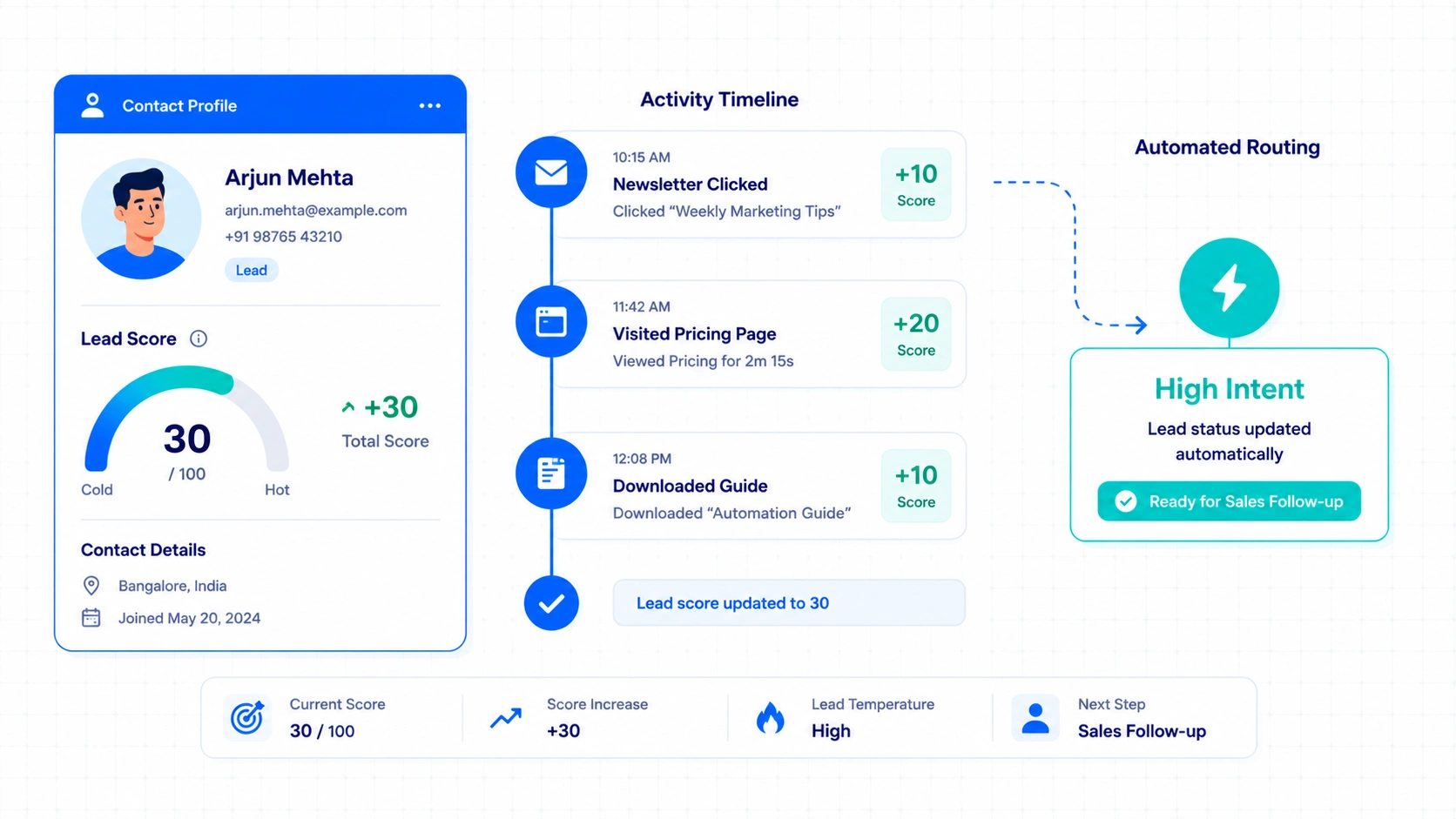
This workflow separates casual readers from buyers automatically. It protects your engagement by ensuring you only pitch products to people actively engaging with your brand.
The Setup:
Imagine you have a blog about software development. You sell a high ticket course on Python. You use a CRM equipped with Active Intelligence 3.0: Wavelength.
The Execution:
- A user joins your email list through a generic programming post. They have a lead score of zero.
- Two weeks later, they click a link in your newsletter about advanced Python frameworks. The system automatically tags them. It adds 10 points to their lead score.
- They visit the sales page for your Python course but do not buy. The system tracks this site visit. It adds 20 points to their score.
- The Autonomous Decision: The system recognizes the score has crossed the threshold of 30 using adaptive memory. It instantly pulls the user out of the general newsletter broadcast. It places them into a hyper targeted educational sequence about Python.
- On day three, it sends a limited discount.
The entire process happens while you sleep. The system evaluated real-time engagement signals and executed the pitch.
Workflow 2: The Self-Adjusting Content Distribution Engine
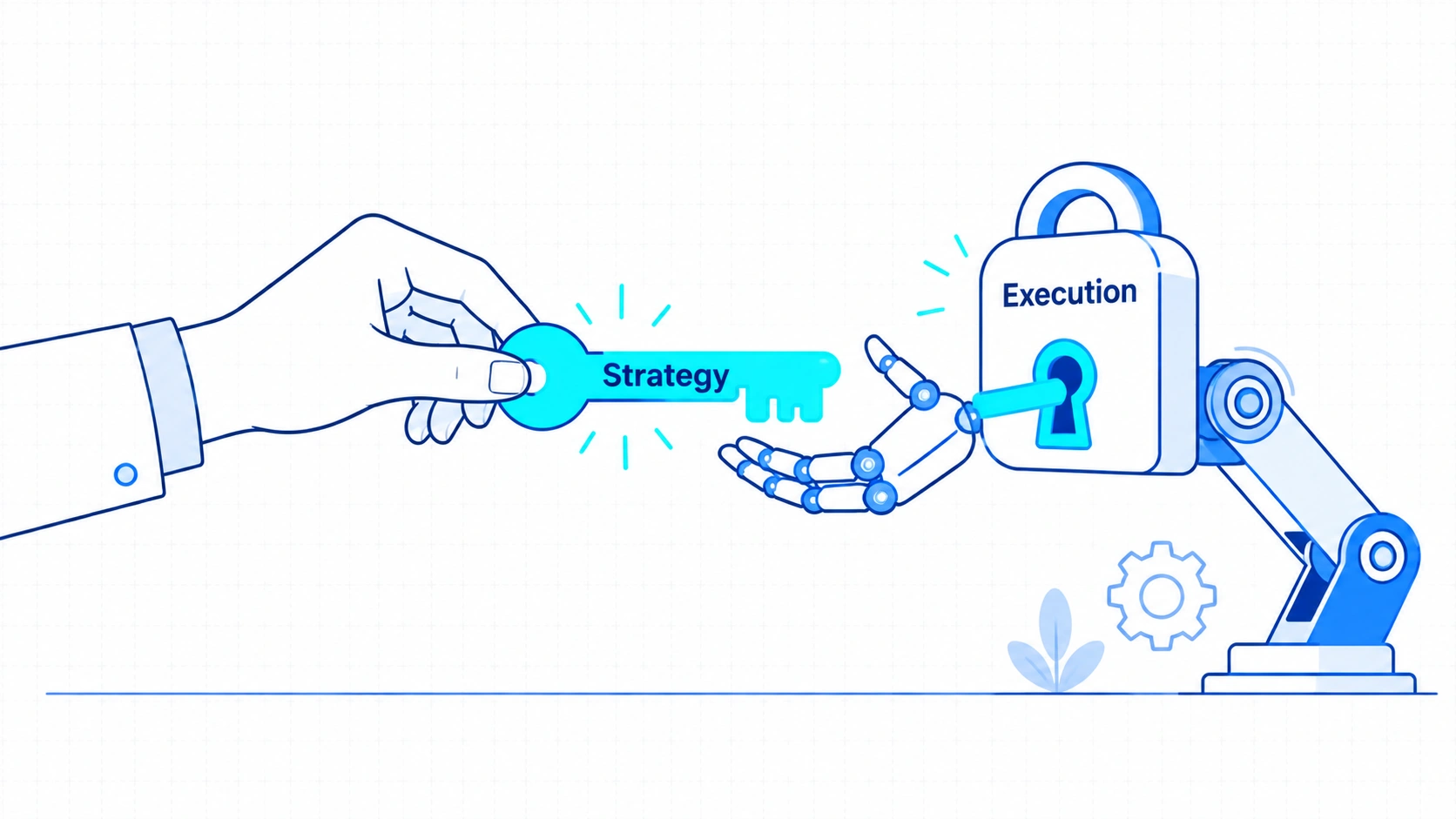
This workflow ensures your content gets maximum reach without you manually posting on every platform.
The Setup:
You are a content creator releasing a new YouTube video every week.
The Execution:
- You upload the video to YouTube.
- The publishing action triggers a workflow. An AI agent extracts the transcript.
- The agent formats the transcript into a written blog post. It publishes it to your site.
- The system drafts three different promotional emails using the AI Actions Library. It sends variant A to a small group. It sends variant B to another small group.
- The Autonomous Decision: Two hours later, the system analyzes the open rates. Variant A has a higher open rate. The system automatically sends Variant A to the remaining 80% of your audience, optimizing for maximum engagement without manual input.
- It then drafts social media posts based on the winning email subject line. It schedules them across your channels.
You uploaded a video. The system handled the text conversion, the split testing, the email broadcast, and the social distribution proactively.
Your 30-Day Autonomous Marketing Roadmap
Building these systems takes focused effort. Use this strict timeline to upgrade your business operations over the next month.
Week 1: The Audit and Cleanse
- Map out your exact customer journey on a whiteboard.
- List every single manual action you take when a new lead enters your world.
- Cancel any software tools you pay for but do not use.
Week 2: The Base Automations
- Fix your basic delivery. Ensure your lead magnets and digital products are delivered without human input.
- Set up simple tagging. If someone clicks a product link in your email, ensure your CRM tags them with that product name.
Week 3: The Behavioral Triggers
- Implement site tracking. Connect your website to your CRM so you can track page visits.
- Build one behavioral workflow. Set up a rule that sends a specific email if a user visits a key landing page twice in one week, letting Active Intelligence 3.0: Wavelength tailor the follow-up based on account depth.
Week 4: The Clean Loop
- Test the entire system with a dummy email address.
- Look for dead ends. Ensure that when a user finishes a sequence, they are automatically routed back to your main newsletter.
- Monitor the initial data, check your Automation Health dashboard for broken triggers, and adjust the delays.
Common Autonomous Marketing Mistakes
Setting up these systems requires dealing with technical friction. Here are the traps you must avoid.
The Infinite Loop Disaster
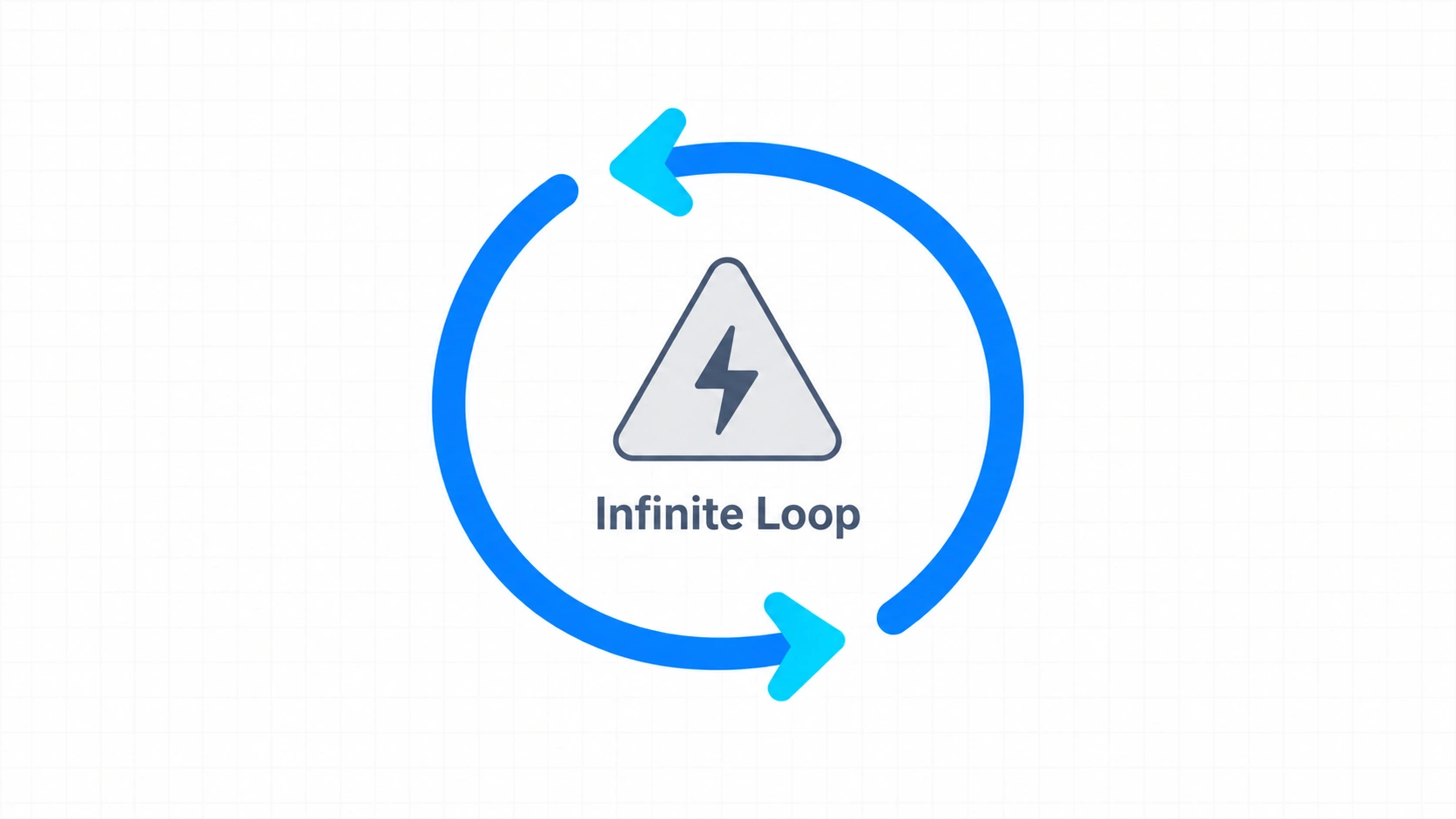
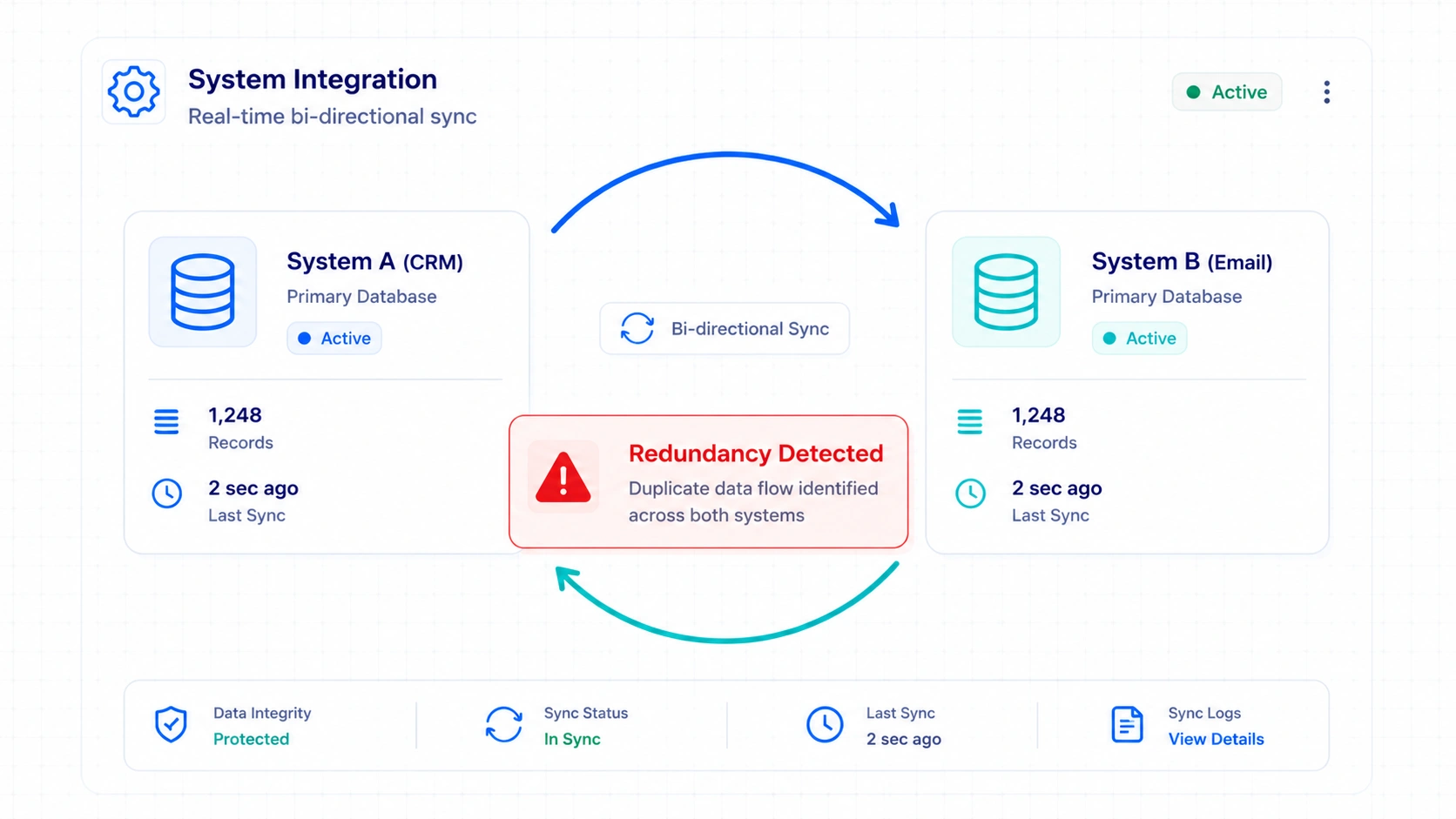
This happens when two tools get stuck triggering each other.
Imagine you set up a rule. When a user is tagged “Buyer” in Stripe, add them to the “Customer” list in your CRM. Then you set up another rule. When a user joins the “Customer” list, update their status in Stripe.
The systems constantly ping each other. You wake up to ten thousand automated emails and a locked API account. Always draw your data flows on paper before connecting tools. Ensure data only flows in one direction.
This is where Active Intelligence 3.0: Wavelength’s proactive Automation Health features provide early warnings, catching looping automations before they flood subscriber inboxes or lock your API access.
Over-Automating Zero Traffic
Many beginners spend a month building a complex behavioral email sequence.
They launch it. Nobody enters the funnel. They have zero website traffic. This is a massive waste of time.
You must have top of funnel volume before you worry about complex lead routing. If you get two email subscribers a day, stick to basic automation. Wait until you have real data to train your autonomous systems.
Ignoring the Edge Cases
Autonomous systems fail when humans act unpredictably.
A user might use two different email addresses to buy a product. The system might not recognize them as the same person. It might send them a promotional email for a product they just bought.
You must build safety nets. Create a specific tag called “Do Not Promote”. Apply it globally to anyone who has recently purchased anything.
The Future of Marketing Automation
The next massive shift is the transition from static rules to fully autonomous agent networks.
Currently, we build the parameters. We tell the system what a “good” lead looks like. In the near future, AI agents will analyze your entire business database. They will identify patterns you missed.
An agent will tell you that people who read the third paragraph of your About page are highly likely to buy. It will then automatically adjust the site navigation to drive more traffic to that page.
For content creators, AI agents will soon handle basic inbox management. An agent will read a sponsor inquiry. It will check your availability. It will quote your standard rate. It will negotiate the terms based on rules you set. You will only step in to sign the final contract.
Platforms like ActiveCampaign with Active Intelligence 3.0: Wavelength show how unified campaign agents already synthesize real-time external signals and account depth to run multi-channel campaigns proactively.
You must adopt systems thinking now. Those who master the logic of autonomy today will easily command the AI agents of tomorrow. Those who remain stuck doing manual data entry will be priced out of the market entirely.
Final Verdict & Next Steps
Manual marketing is a tax on your potential.
Every hour you spend copying data is an hour stolen from deep creative work. You are the bottleneck. You have to stop focusing on marketing actions and start focusing on marketing decisions.
Automation executes actions. Autonomy makes decisions. Scale always beats effort in the long run.
Start small. Look at your business today. Identify the single most repetitive task you perform every week. Document the steps. Find the tool that can execute those steps based on a behavioral trigger. Build that one workflow.
Watch it run successfully. Once you reclaim that first hour, you will understand the true power of a self-sustaining system.
Frequently Asked Questions (FAQ)
What is autonomous marketing?
It is a system using AI to make independent marketing decisions based on real-time user behavior. It removes the need for manual rule setting.
Is Autonomous Marketing the Same as AI Marketing?
No. AI marketing usually refers to using tools like ChatGPT to write copy. Autonomous marketing refers to AI systems deciding who gets that copy and when to send it.
How is autonomous marketing different from automation?
Automation executes static rules on a schedule. Autonomous marketing analyzes data and dynamically adjusts the communication path for each individual user.
What is the Difference Between Predictive Marketing and Autonomous Marketing?
Predictive marketing guesses what a user will do next based on data. Autonomous marketingtakes proactive intelligence, evaluates real-time engagement and account depth, and actually executes the campaign without asking for your permission.
What is an AI marketing agent?
An AI marketing agent is a software entity that can perform complex tasks, qualify leads, and optimize campaigns independently based on goals you define.
What is Active Intelligence 3.0: Wavelength in marketing?
It is ActiveCampaign’s proactive intelligence engine that connects customer data across multiple channels. It evaluates specific account depth and external signals to trigger personalized campaigns, monitor automation health, and drive higher engagement in real time.
Can Autonomous Marketing Work Without ActiveCampaign?
Yes. ActiveCampaign is a great tool for this, but any advanced CRM that allows dynamic behavioral tagging and conditional split testing can form the base of an autonomous system.
Does autonomous marketing replace email marketing?
No. It upgrades email marketing. It ensures emails are only sent when the user is most likely to engage.