Disclosure: This website uses affiliate links; I may earn commissions at no extra cost to you. Learn more.
In this ActiveCampaign VS HubSpot article today, I’ll help you decide which platform is the right fit for you in 2026.
If you are trying to decide between ActiveCampaign and HubSpot, you are likely staring at two very different CRM solutions wrapped in identical AI promises.
You do not need another generic feature list comparing email marketing automation tools and drag-and-drop email builders.
You need to know which system actually works when you have 10,000+ contacts and a complex sales pipeline to manage.
To get the answer for myself, I spent the last three weeks moving my customer data back and forth using their migration tools.
I tested HubSpot’s new Breeze Assistant and deliberately burned through their 2026 unified credit system just to see how fast the billing scales.
Then I rebuilt the exact same automation workflows using ActiveCampaign’s Active Intelligence workspace to see if it could match the output.
I hit frustrating API limits trying to set up multi-channel marketing, wrestled with clunky user interfaces, and found out exactly how autonomous these platforms really are.
I am going to show you where the mechanical friction lies in both systems, what the AI actually does for your marketing campaigns, and which pricing model is a quiet trap for your budget.
The Core Difference in How They Built Their Systems

HubSpot is an all-in-one Customer Relationship Management suite in which AI serves as a heavy, credit-based layer for data enrichment.
On the other hand, ActiveCampaign is a dedicated marketing automation engine where AI is baked directly into the visual canvas to speed up actual campaign creation.
One functions as a digital AI-powered assistant, while the other functions as a relentless email marketer.
HubSpot wants to own your entire business operations, from content management to your deal pipeline.
You get sales, marketing, and customer service tools that all talk to each other seamlessly under one roof, backed by their extensive HubSpot Academy training.
The tradeoff is a massive learning curve and an interface that feels like you are operating a commercial airplane.
In contrast, ActiveCampaign focuses strictly on mapping out complex customer journeys.
Their platform remains one of the best visual marketing workflow builders I have used for branching logic.
It lacks the native enterprise helpdesk depth of HubSpot, but it wins easily on pure lead nurturing sequences and execution speed.
Building Automation Workflows (The Friction Test)
The actual experience of building automated emails is night and day between the two platforms.
HubSpot forces a linear, top-down structure that requires excessive clicking to view conditional splits.
And at the opposite end, ActiveCampaign gives you an open, zoomed-out canvas where you can see every branching path at a glance.
The HubSpot Workflow Builder

Building in HubSpot feels like filling out an endless, vertical tax form.
You add a trigger, scroll down, click a plus icon, open a side panel, and save the action.
It works fine for simple lead nurturing, but at scale, this becomes a frustrating problem.
Why Simple Sequences Take Too Many Clicks
I tried building a standard 5-step follow-up sequence with two conditional branches in HubSpot.
I lost count of the clicks after thirty.
Every time you want to add a delay or a conditional split based on lead scoring, a heavy slide-out menu takes over the right side of your screen.
You cannot easily see what happens inside a “Yes/No” branch without expanding and collapsing nested sections.
If you make a mistake setting up your start/stop triggers early on, adjusting the downstream actions is a mechanical headache.
Pros & Cons of HubSpot Workflows
To summarize, here’s what’s good and bad with HubSpot’s workflow.
PROS
Deep integration with sales funnels and ticket routing.
Clean, standardized UI that prevents broken logic loops.
CONS
Terrible visibility for complex, multi-branching funnels.
Mechanical friction slows down rapid campaign deployment.
ActiveCampaign’s Visual Automation Canvas

ActiveCampaign treats workflow automation like a mind map.
You drop your triggers and actions onto a wide-open grid and connect them visually.
It is the most intuitive builder on the market for mapping out multichannel journeys for your customers or sales pipeline.
Splitting Paths and Conditional Logic

I rebuilt that exact same 5-step nurture sequence in ActiveCampaign using their pre-built automation templates.
It took exactly four minutes.
You click the plus icon, choose your condition based on customer segmentation, and the visual tree splits cleanly left and right.
You can zoom out with your mouse wheel to see the entire customer lifecycle from start to finish.
I love how easily you drag and drop a “Go To” action to merge two separate branches back together. It just works.
Pros & Cons of ActiveCampaign Workflows
And now to summarize the good and bad of ActiveCampaign’s workflow, here are the pros and cons for you.
PROS
Unmatched visual clarity for complex branching and list segmentation.
Fast drag-and-drop interface with minimal menu hopping.
CONS
The sheer number of Start Triggers can overwhelm beginners.
Zooming out too far on massive automations makes text unreadable.
AI and Autonomous Capabilities

The AI race in 2026 is where the true divergence happens.
HubSpot built a reactive, credit-gated assistant designed to answer questions and enrich contact records.
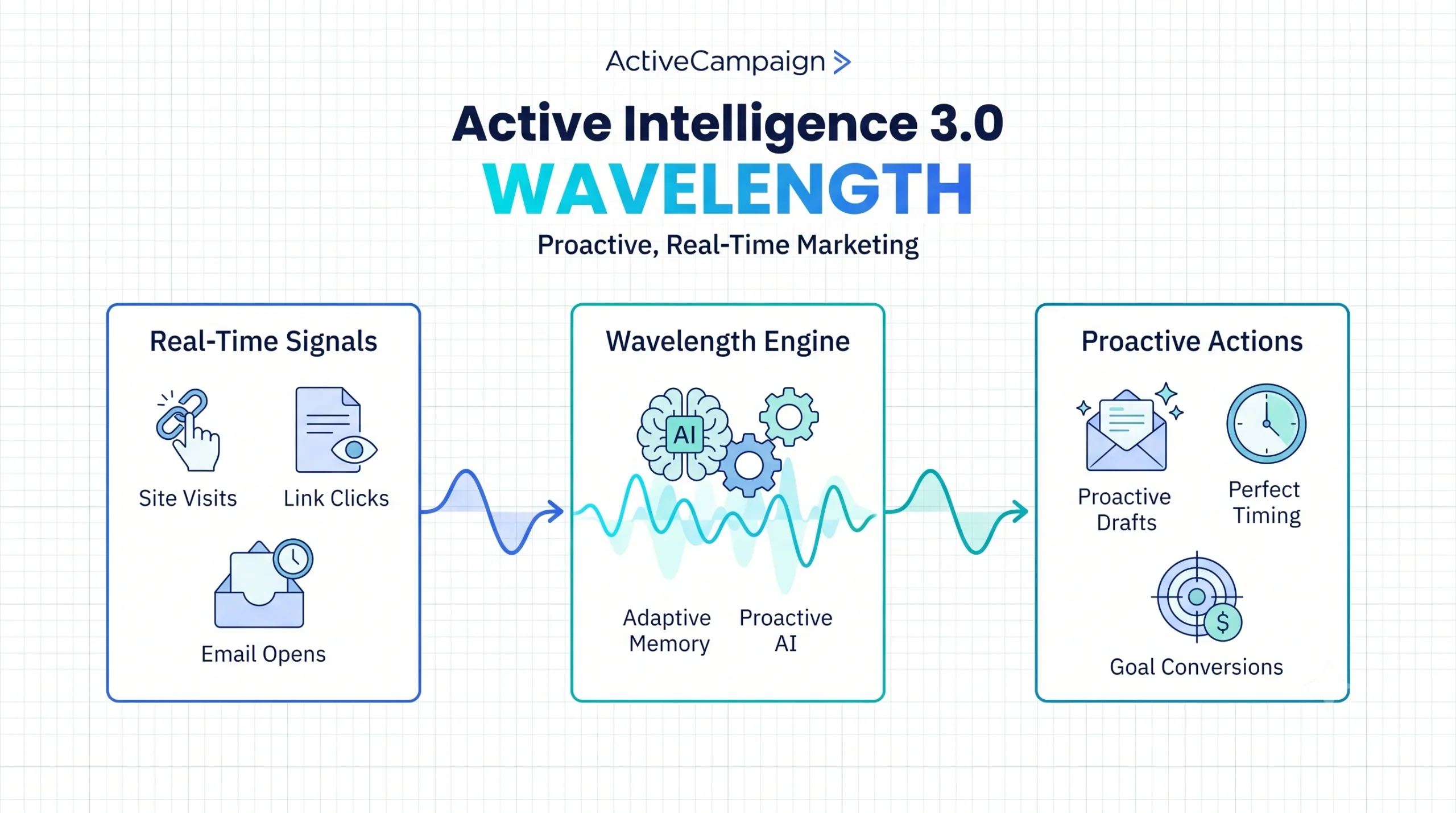
In contrast to that, ActiveCampaign built a proactive, autonomous engine designed to actually generate and deploy your marketing assets using machine learning.
HubSpot Breeze Copilot

HubSpot’s AI-powered tools function like a highly integrated, very expensive intern.
You type a prompt into the sidebar, and it summarizes CRM records or drafts a quick sales email.
It acts as reactive assistance for managing customer interactions.
I tested the Prospecting Agent to research a list of target companies.
It did a great job pulling external data into the Smart CRM.
The problem is that every time the agent completes a deep research task, you burn 10 Breeze credits.
If you use the Customer Agent to handle a live chat conversation, you burn 100 credits, which equals exactly $1.00 per chat at the time of writing this.
The friction here is the constant anxiety over your credit balance and unpredictable monthly costs.
ActiveCampaign Active Intelligence

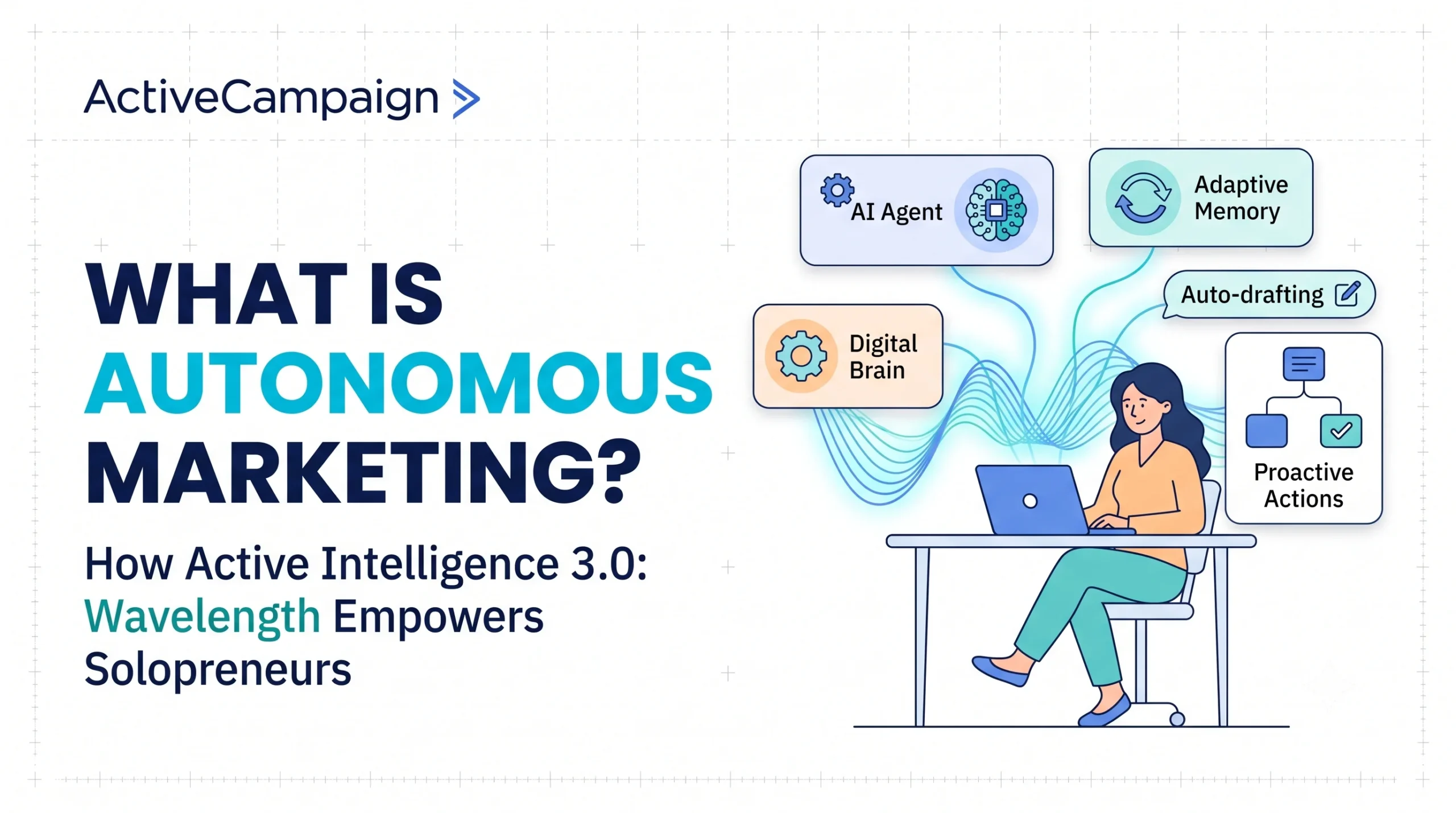
Active Intelligence replaces manual marketing labor entirely.
You give it a business goal, and it actively generates the required assets.
I tested the AI Campaign Builder to see if it could handle the heavy lifting of campaign creation.
I typed a prompt asking for a re-engagement campaign targeting cold leads.
Within seconds, the system built the audience segment, generated the Email Templates, applied my AI Brand Kit styling, and used predictive sending to suggest the optimal send times.
It felt like cheating.
Active Intelligence does not nickel-and-dime you with micro-transactions per prompt.
The features are baked directly into the platform tiers.
You get actual autonomous marketing, where the AI writes the logic, and you just hit approve.
Comparison: The AI Workload
| Feature Area | HubSpot Breeze AI | ActiveCampaign Active Intelligence |
| Core Function | Data enrichment and sales assistance. | Autonomous campaign and workflow generation. |
| Pricing Model | Usage-based credits ($10 per 1,000). | Included in plan tiers. |
| Automation Setup | Manual, step-by-step building. | AI generates the entire multi-step workflow. |
| Brand Consistency | Relies on manual template setup. | AI Brand Kit auto-applies logos, fonts, and colors. |
The Hidden Costs and Pricing Models
HubSpot hides its true cost behind a complex web of add-ons, contact tiers, and onboarding fees.
ActiveCampaign tells you exactly what you will pay upfront based on your database size.
A growing contact list on HubSpot can quickly devour your entire operating budget if you do not actively monitor your account settings.
The HubSpot Add-On Trap

I uploaded a clean list of 15,000 leads into HubSpot Marketing Hub Professional.
My projected monthly bill instantly spiked because they charge a massive premium for every 5,000 marketing contacts you add.
You are also immediately hit with a mandatory $3,000 onboarding fee just to access the marketing software.
How Scaling Contacts Costs a Fortune?
HubSpot gives you a base limit of marketing contacts, and exceeding that limit triggers automatic, non-refundable overage charges.
I spent four hours manually clicking through 3,000 individual records to switch them to non-marketing status just to avoid a penalty fee.
You are essentially punished for successful contact growth.
ActiveCampaign’s Predictable Tiers
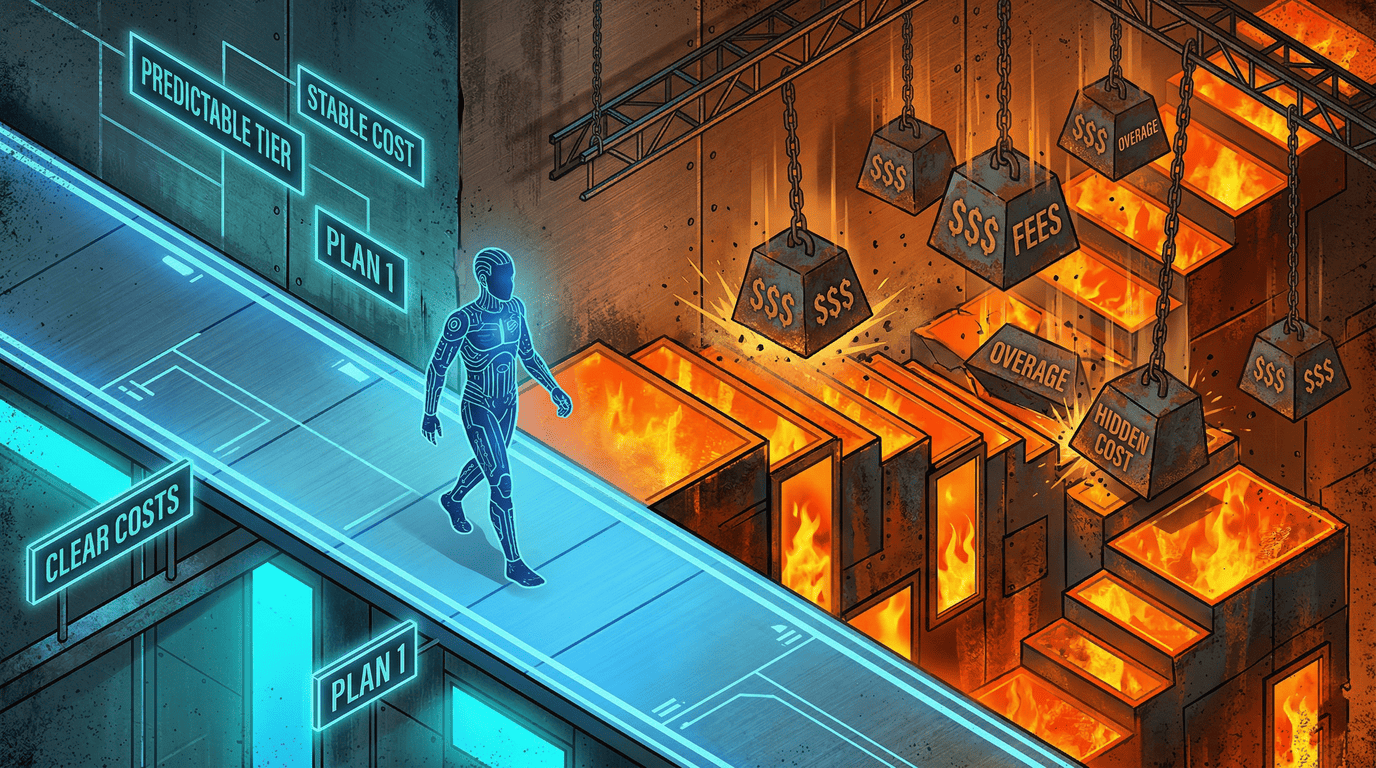
On the contrary, ActiveCampaign relies on simple subscription pricing across four straightforward plans: Lite, Plus, Professional, and Enterprise.
You select your tier, and your price scales predictably as your list grows.
The Active Intelligence features are baked into the higher tiers without hidden micro-transactions.
Cost Comparison: The 10,000 Contact Reality
| Platform Setup | Base Monthly Cost | Hidden Fees at Scale | AI Cost Structure |
| HubSpot Pro | High | Marketing contact overages, Onboarding fees. | Pay-per-prompt (Breeze Credits). |
| ActiveCampaign Pro | Moderate | None. Total database billing. | Included in the tier price. |
Final Verdict: Which Platform Deserves Your Money?

ActiveCampaign is the clear winner for teams that want autonomous email automation without enterprise bloat.
HubSpot only makes sense if you have the budget to completely replace your sales, service, and marketing tech stacks at the exact same time.
Choose HubSpot If…
You have a massive enterprise budget and a dedicated system administrator to manage the platform.
Your sales team demands a deeply integrated CRM with advanced deal pipelines and refuses to use third-party integrations.
You rely heavily on inbound content marketing and want to use their native content management system.
Choose ActiveCampaign If…
You want an AI engine that actually builds your marketing campaigns instead of just answering data queries.
You need advanced visual automation without the mechanical friction of a clunky, menu-heavy interface.
You want predictable, transparent pricing structures that do not punish you with surprise fees for acquiring new leads.
If you are tired of clicking through ten menus just to build a basic welcome sequence, you should test ActiveCampaign’s automation canvas for yourself.
You can grab a free trial here to see how fast Active Intelligence generates your next sales funnel.